
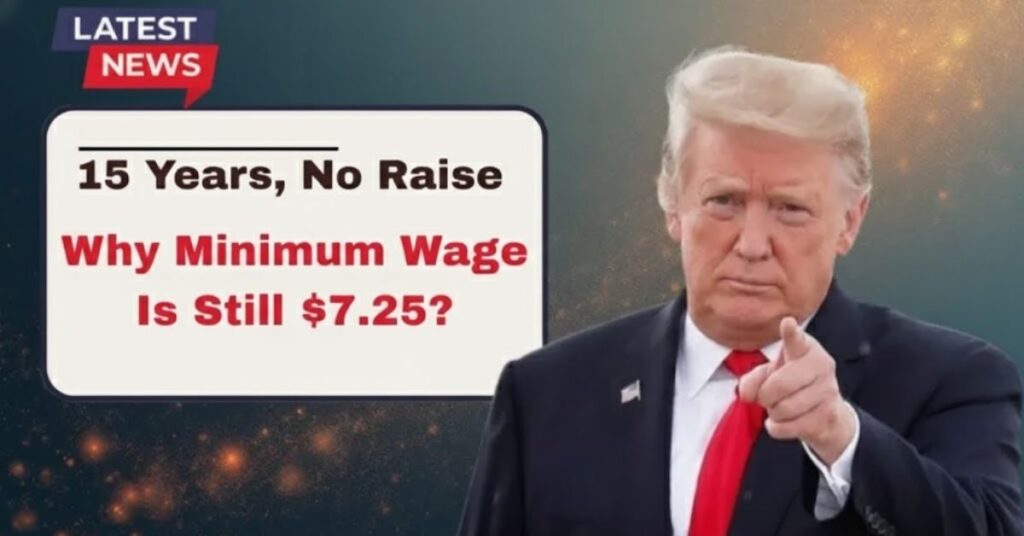
Washington, D.C. – It’s the same story that’s echoed across the country for 15 years: the federal minimum wage in the United States has stubbornly stood at $7.25 per hour. As the cost of living climbs steadily upward, workers and families struggle to keep up, businesses conflict over legislation, and politicians spar endlessly about the “right” number. Why, in the wealthiest nation on earth, has the federal minimum wage gotten so stuck? What’s blocking progress, and who’s really paying the price? This in-depth USA News piece dives into the heart of the issue with clear answers, real-life voices, and an eye for what comes next.
A Look Back: The U.S. Federal Minimum Wage in History
The journey of the U.S. federal minimum wage started back in 1938 with the Fair Labor Standards Act, a landmark piece of labor legislation meant to protect workers during the Great Depression. Back then, President Franklin D. Roosevelt signed into law a starting wage of just $0.25 per hour. Over the decades, increases followed, often after heated political negotiations and widespread activism. Each raise reflected the shifting landscape of American life, from post-WWII booms to 1970s inflation. Yet, following its last increment in July 2009, the U.S. federal minimum wage has frozen at $7.25.
Table: Snapshot of U.S. Federal Minimum Wage Changes
| Year | U.S. Federal Minimum Wage (per hour) | Notable Context |
|---|---|---|
| 1938 | $0.25 | Fair Labor Standards Act |
| 1956 | $1.00 | Postwar boom |
| 1968 | $1.60 | Highest inflation-adjusted value |
| 1997 | $5.15 | Prosperous 1990s economy |
| 2009 | $7.25 | Last increase (July) |
| 2024 | $7.25 (still) | 15 years and counting |
Why Has the U.S. Federal Minimum Wage Stagnated So Long?
Political Gridlock and Division
Ask anyone in Washington, and you’ll hear it right away: gridlock. In Congress, minimum wage bills prompt fierce debates, predictable party-line splits, and a parade of impassioned testimonies. The House of Representatives has, at times, passed minimum wage hikes, only to see them stall in the Senate. Leaders from both parties regularly cite economic studies—some lauding the potential for poverty reduction, others warning of job losses. The U.S. federal minimum wage isn’t just a matter of dollars; it’s become a symbolic fault line.
The States Take the Lead
While the U.S. federal minimum wage remains stuck, individual states haven’t waited for Congress. From California to New York, states and even cities have pushed through their own hikes, some topping $15 an hour. Right now, 30 states and D.C. boast higher minimum wages than the U.S. federal baseline. Why does this matter? It creates a patchwork map: a worker in Mississippi might be stuck at $7.25, while a peer in San Francisco earns more than double. This fuels regional wage inequality and complicates national calls for a raise.
Economic Arguments Take Center Stage
Opponents of raising the U.S. federal minimum wage often cite concerns for small businesses and entry-level job seekers. They argue that sharp increases could force mom-and-pop stores to trim hours, cut jobs, or even close. Supporters counter that higher wages mean more spending power for the poorest workers, which could ripple through the economy and drive growth. With so many conflicting data points and studies, politicians have wiggle room to double down on their positions, stalling compromise.
Shifting Public Opinion – But No Movement in D.C.
Poll after poll shows most Americans actually support a higher minimum wage. Initiatives at the ballot box—like in Florida in 2020, where voters approved a $15 minimum wage—often pass by broad margins. Yet, these grassroots movements have not broken through at the federal level, partly due to the outsized influence of lobbyists and the complex reality of Congressional negotiations.
Real Stories: What It’s Like to Live on $7.25 an Hour
Maya, 28, works early-morning shifts at a fast food chain in rural Alabama. She’s been earning the federal minimum wage since she was 19. “I’ve seen everything get more expensive—gas, groceries, my rent,” she says, “but my pay hasn’t changed once. I feel invisible to Congress. Like they just forgot about us.”
For millions like Maya, the U.S. federal minimum wage is not some policy debate; it’s the difference between making rent and missing a meal. Many workers patch together two or even three jobs just to cover essentials. The real purchasing power of that $7.25? Adjusted for inflation, it’s worth less than it was when last raised in ## Why the U.S. Federal Minimum Wage Has Stayed at $7.25 for 15 Years: What’s Causing the Stalemate?
Special Report by USA News – An Inside Look at America’s Unmoving Minimum Wage
The U.S. Federal Minimum Wage—once the symbol of progress for American workers—has not budged since July 24, 2009. While wages for top earners and costs of living soar, millions of workers still earn the same $7.25 an hour their counterparts did 15 years ago. Why is the federal minimum wage frozen in time, and who stands to gain—or lose—from the stalemate? In this expansive report, we dig deep into the politics, economics, and everyday human stories behind the most stubborn number in the American economy.
The Story Behind the $7.25: A Tale of Hope and Frustration
Fifteen years ago, raising the U.S. Federal Minimum Wage was a rallying cry for fairness. Congress last boosted it in three stages from $5.15 to $7.25, capping off a series of increases under the Bush administration. The move was supposed to keep American workers afloat as prices rose. Fast-forward to today, and that hope has grown stale. For the lowest-paid Americans, real earnings have actually fallen when adjusted for inflation.
For many, the U.S. Federal Minimum Wage has now turned into a symbol—not of opportunity, but of how hard change really is in Washington. Why are lawmakers standing still as millions fall further behind? The reasons are more complex—and more personal—than a dry debate on Capitol Hill might suggest.
Table: Federal Minimum Wage vs. Cost of Living (2009–2024)
Here’s a look at how far the $7.25 goes today compared to 15 years ago.
| Year | U.S. Federal Minimum Wage | Average Rent (1BR, U.S.) | Gallon of Milk | Avg. Monthly Utilities | Purchasing Power Index* |
|---|---|---|---|---|---|
| 2009 | $7.25 | $780 | $2.29 | $150 | 100 |
| 2017 | $7.25 | $1,012 | $2.92 | $175 | 82 |
| 2024 | $7.25 | $1,470 | $3.75 | $210 | 68 |
*Purchasing Power Index represents what $7.25 could buy in 2009 versus subsequent years.

The Political Chess Game: Why Congress Fails to Agree
Ask any group of politicians about the U.S. Federal Minimum Wage, and you’ll get as many answers as people in the room. The official story boils down to a fierce tug-of-war:
Partisan Gridlock
Historically, Democrats push to increase the wage across the board. They say it’s a moral and economic imperative. Republicans, meanwhile, tend to argue that higher minimum wages hurt small businesses and reduce jobs. Both arguments have a kernel of truth, but the disagreements reflect deep divides about the role of government and the meaning of “fair pay.”
In the past decade, major efforts to raise the wage—some proposals aiming for $10.10, others for $12, and most recently $15 an hour—have endlessly stalled in Congress. The last big push in 2021, attached to President Biden’s COVID relief, failed in the Senate. Filibusters and the complicated “reconciliation” rules have blocked most attempts ever since.
States Going Their Own Way
As Congress debates, states and cities have taken action. Today, 30 states from California to New York require hourly pay above the federal level—some reaching $16 or even $20. For millions in the South and Midwest, though, $7.25 is still the law of the land.
This patchwork system means America’s lowest wage depends more on geography than federal policy. For fast food workers in Alabama, a raise depends on what Congress does. For those in Seattle, their city council did it already.
Who Works for $7.25? The Hidden Faces Behind the Number
When politicians and pundits discuss the U.S. Federal Minimum Wage, they often draw a portrait of the typical worker as a teenager or a part-timer. That’s true for a fraction, but it’s nowhere close to the whole story.
In 2024, the Economic Policy Institute found that:
- Nearly 60% of those making the U.S. Federal Minimum Wage are adults 25 or older.
- Over half are women.
- Many work full-time and are supporting families.
- Black and Latino workers are overrepresented among minimum wage earners.
For these Americans, $7.25 isn’t “just a starting wage”—it’s their reality. A single mother in Texas, a grocery cashier in rural Georgia, a home healthcare aide in Kentucky: their stories anchor the national debate in everyday struggles and dreams.
Living on $7.25: Real Stories from Main Street
Megan’s morning starts at 4:30 a.m. Every day, she flips open the local café where she’s worked for three years—earning the U.S. Federal Minimum Wage plus scattered tips. With rent, groceries, gas, and bills, she’s always one minor emergency from disaster.
“I budget everything—down to the penny. Sometimes I skip dinner so my kid doesn’t go hungry,” she shares. Her eyes cloud with worry at the idea of a medical bill or car breakdown. “It doesn’t feel right, working this hard and being stuck.”
Her story is echoed in thousands of towns. Many minimum wage workers say they’ve delayed medical care, juggled two or more jobs, or taken public assistance just to keep the lights on.
Arguments For and Against Raising the Federal Minimum Wage
The national fight over the U.S. Federal Minimum Wage is about more than numbers. It’s about fundamental beliefs—about markets, fairness, and the American dream.
Supporters argue:
- Raising the wage reduces poverty and boosts spending in local communities.
- Higher pay could lessen the need for government assistance programs.
- Americans who work full-time shouldn’t live in poverty.
- Businesses benefit from lower turnover and more productive, motivated workers.
Opponents contend:

- Increases could lead to lost jobs, especially for small businesses and in rural areas.
- Businesses may raise prices or turn to automation.
- The federal approach ignores differences in local economies.
- Some say it should be a “starter wage” for those entering the workforce.
The debate is emotional and fraught, as both sides point to studies supporting their views. The truth? Research is mixed: some studies show modest job losses with big increases, others little impact, and some reveal broader benefits.
The States Take Charge: How a Patchwork System Emerged
With Congress gridlocked, many states and cities have simply acted on their own. California, Washington, and New York have led the way, ushering in $15+ minimum wages, often indexed to inflation.
Other states, especially in the Deep South and parts of the Midwest, have held firm to the federal rate. In a handful, laws actually forbid cities from raising wages above the state minimum.
This has created a strange economic map: crossing a state line can change a worker’s paycheck overnight. For traveling nurses, fast food workers, or home care aides, the same job can pay half as much just a short drive away. The federal floor, once a safety net, now feels like a shadow of what it was meant to be.
The Cost of Standing Still: Who Benefits from a Stagnant Minimum Wage?
In the U.S., money and power often explain the status quo. Business lobbying groups, like the National Restaurant Association, have spent millions lobbying against wage hikes. Some industries, especially hospitality and retail, rely on low wages to keep costs low and profits up.
Yet, not all business owners agree. Some small business owners and CEOs—including those in the “Good Jobs” movement—believe fair pay is good for business and society.
What’s clear is that stagnant minimum wages mean billions saved by corporations and government—because the gap is filled by taxpayers through food stamps, Medicaid, and other aid programs.
Inflation’s Bite: How $7.25 Has Shrunk Over Time
Prices have soared since 2009. A Big Mac, movie ticket, or bag of groceries costs far more now. According to the Bureau of Labor Statistics, $7.25 in 2009 is equal to about $10.50 today. That means today’s minimum wage workers are paid less in real terms than at almost any point since the 1950s.
For a full-time worker, $7.25 per hour brings in about $15,080 per year—far below the federal poverty line for a family of three. In dozens of U.S. cities, a single-bedroom apartment eats up their entire paycheck.
The Federal Minimum Wage Around the World: How Does the U.S. Compare?
Let’s take a brief look beyond America. Many nations routinely reassess their minimum wages, often matching increases to inflation or cost of living. Here’s how the U.S. Federal Minimum Wage measures up:
| Country | Federal/National Minimum Wage | Hourly (USD, 2024) |
|---|---|---|
| Australia | AUD $23.23 | $15.50 |
| UK | £11.44 | $14.40 |
| Germany | €12.41 | $13.40 |
| Canada (avg.) | CAD $16.65 | $12.25 |
| France | €11.65 | $12.60 |
| United States | $7.25 | $7.25 |
The U.S. federal minimum wage is among the lowest in the developed world.
The Human Cost: More Than Numbers
Lost in all the debates and charts are real people. The U.S. Federal Minimum Wage isn’t just a policy—it’s a lived experience for millions. Low wages mean delayed dreams, second and third jobs, parents missing school events or birthdays, families stuck in cycles of poverty.
Mental health professionals note the toll: anxiety, depression, stress-related illnesses—all linked to economic strain. For many, dreams of college, car ownership, or stable housing remain out of reach.
The Future: Will the U.S. Federal Minimum Wage Finally Rise?
After years of idle talk, some leaders promise action. President Biden has openly backed a $15 minimum wage. Some Congressional bills are in the works, but face uphill climbs.

Labor advocates say public opinion is shifting: polls show most Americans favor higher minimum wages, especially after the pandemic highlighted the essential work of grocery clerks, health aides, cleaners, and other low-wage workers.
But political analysts warn that meaningful change remains slow. With Congress split and Senate rules making it tough to overcome filibusters, any hike in the U.S. Federal Minimum Wage will require extraordinary political will.
Americans Speak: Grassroots Movements and Worker Strikes
Over the past decade, the Fight for $15 campaign—a coalition of workers, unions, and activists—has shined a spotlight on the issue. Fast food strikes and walkouts have gone from rare to routine, forcing big corporations to raise pay in markets where lawmakers have not acted.
These grassroots efforts have shifted the conversation and changed lives at the local level. Yet millions are still left behind as the U.S. Federal Minimum Wage remains unchanged.
FAQs: Everything You Need to Know About the U.S. Federal Minimum Wage
Q: What is the current U.S. Federal Minimum Wage?
A: As of 2024, it remains at $7.25 an hour, unchanged since 2009.
Q: Who decides on changes to the federal minimum wage?
A: Congress must pass a law—signed by the President—to raise it.
Q: Are all workers paid the federal minimum wage?
A: No, many states and cities have set higher local minimum wages. Some jobs, like tipped workers, have different standards.
Q: Why hasn’t it gone up in 15 years?
A: Mainly due to political gridlock between Democrats (who support increases) and Republicans (who oppose them), plus heavy business lobbying.
Q: How does the U.S. compare to other countries?
A: The U.S. Federal Minimum Wage is among the lowest of rich, industrialized countries.
Q: Could raising it hurt small businesses?
A: Some argue it could, especially in low-cost areas. Others say gradual increases can be absorbed, and overall local economies benefit.
Q: Is there momentum for change?
A: Yes. Many states are moving ahead, and public sentiment favors a higher minimum wage. In Congress, the issue remains sharply contested.
Conclusion: What’s Next for the U.S. Federal Minimum Wage?
Fifteen years of inaction have left millions of American workers in a time warp. The U.S. Federal Minimum Wage is an enduring flashpoint for debates about fairness, markets, and the kind of society the U.S. aspires to be.
As the cost of living climbs and more states go their own way, pressure is mounting on Washington. Will Congress finally deliver a long-overdue raise, or will America’s working poor remain stuck? One thing’s for sure: the story of the U.S. Federal Minimum Wage is far from over—and the stakes have never been higher.