
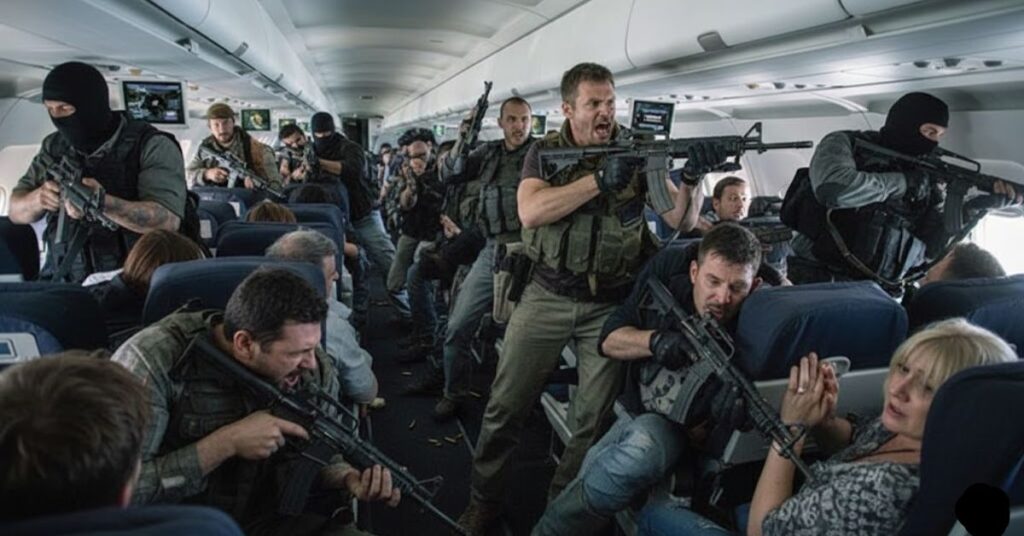
A Routine Flight Turns Into A Nightmare In The Sky
Airplane Hijacked Mid-Air For most people on board, it was supposed to be just another ordinary journey. A business trip, a family vacation, a long-awaited reunion – nothing unusual, nothing dramatic. The cabin lights were dim, the seatbelt signs were off, and the soft murmur of conversations mixed with the hum of the engines. Then, in a matter of moments, that calm was shattered and the words “Airplane Hijacked Mid-Air” would travel across the world.
What began as a routine flight quickly turned into a terrifying ordeal. In an age where almost every passenger carries a smartphone, the story of this Airplane Hijacked Mid-Air incident has been shaped not only by official statements and airline reports, but also by shaky, emotional videos recorded by people who genuinely believed they might not survive. Those recordings, often just a few seconds long, are now powerful reminders of how suddenly life can change.
The Flight Before The Crisis: A Normal Day Above The Clouds
Before the words “Airplane Hijacked Mid-Air” were flashed on news tickers, the journey looked like any other. The aircraft, a standard narrow-body jet used by airlines around the world, had taken off on time. Weather conditions were stable, visibility was good and the route was considered safe.
Families clicked selfies, children watched cartoons on seat-back screens, business travellers opened laptops and cabin crew went about their usual service – distributing meals, checking seatbelts, answering routine questions.
Several passengers later said the mood was light. Some recalled laughter from a group heading for a holiday. Others remembered a quiet elderly couple holding hands. No one had the faintest idea that within an hour, their flight would be known globally as the one where an Airplane Hijacked Mid-Air became a haunting headline.
The Moment Everything Changed
According to multiple accounts, the first sign that something was wrong was not shouting or panic. It was a small disturbance in the aisle. A few people in the front section saw a sudden movement, a tense exchange near the galley, and a member of the cabin crew backing away with visible fear in their eyes.
| Detail | Information |
|---|---|
| Headline | Airplane Hijacked Mid-Air – Passengers Capture Terrifying Final Moments! |
| Main Focus | Passenger recordings, human stories, timeline of events and safety questions after the Airplane Hijacked Mid-Air incident |
Within seconds, the captain’s calm voice was heard over the intercom, but this time it was different. The tone was controlled yet strained. Passengers were told to remain seated, stay calm and follow crew instructions. No clear explanation was given, but the tension in the air was unmistakable.
It didn’t take long for whispers to start spreading: “Something is wrong…”, “Did you hear that?”, “What is happening?” Soon, the phrase Airplane Hijacked Mid-Air passed from row to row, not as an official announcement but as a fearful guess that felt more and more real with every passing minute.
Inside The Cabin: Fear, Silence And Shaky Phone Cameras
As the situation unfolded, some passengers instinctively reached for their phones. In modern disasters, documentation begins even before people fully understand what is going on. That is exactly what happened inside this Airplane Hijacked Mid-Air crisis.
The first clips that later surfaced online showed almost no clear view of the hijackers themselves. Instead, they captured the atmosphere: the sound of a child crying softly, the voice of a passenger whispering a prayer, the quiet commands of a crew member asking everyone to keep their heads down.
One video, just 12 seconds long, became one of the most shared clips connected to this Airplane Hijacked Mid-Air incident. It showed nothing but the back of an airline seat, yet the audio told the whole story. Someone is heard saying, “If anything happens, tell them I love them,” followed by a deep, shaky breath.
Another recording, taken from near the wing, showed the cabin lights flickering slightly, the tray tables up, and passengers gripping armrests so tightly that their knuckles turned white. The person holding the phone does not speak. They just pan slowly from one side of the cabin to the other, capturing the frozen expressions around them.
These videos, captured in real time during the Airplane Hijacked Mid-Air drama, are not cinematic, not polished, not framed perfectly. That is precisely why they have such impact. They show raw fear, confusion and a kind of collective silence that is more powerful than any scream.
The View From The Cockpit: Pilots Under Extreme Pressure
While passengers grappled with fear in the cabin, the cockpit was at the centre of the Airplane Hijacked Mid-Air crisis. Even without knowing every detail of what happened behind the locked door, aviation experts can piece together the immense pressure the pilots must have faced.
A hijack situation requires quick decisions under conditions where choices are limited and stakes are unimaginably high. Pilots are trained for emergency scenarios, but no simulator can fully prepare them for the emotional reality of an Airplane Hijacked Mid-Air, where every action might decide the fate of hundreds of lives.

From coordinating discreetly with air traffic control, to sending emergency codes, to trying to maintain a calm, level tone in cabin announcements, the crew had to perform a near-impossible balancing act: keep the hijackers from escalating the situation, protect the passengers and create as many options as possible for a safe outcome.
In later analysis, experts pointed out how the controlled descent, the carefully managed speed and the apparent attempt to stay within a particular corridor of airspace all suggested that the cockpit was doing everything it could to keep the Airplane Hijacked Mid-Air situation from spiralling out of control.
Inside The Control Rooms: When A Code Changes Everything
Far away from the aircraft itself, screens in air traffic control centres and airline operation rooms began to light up with alerts. A transponder code associated with a hijack had reportedly been activated, and within moments, the words Airplane Hijacked Mid-Air were no longer just whispers in the cabin – they were a confirmed nightmare for aviation authorities.
In such situations, protocols kick in at lightning speed. Controllers work to maintain contact, fighters may be alerted depending on national policy, and neighbouring countries are informed. Radar screens showing a simple moving dot now represent a crisis that governments, security agencies and airline officials all scramble to respond to.
Questions flood in. Where is the aircraft heading? Is it following its planned route? Is it trying to divert? Is there a risk to cities or strategic locations? Every movement of the aircraft is analysed in real time, every altitude change interpreted as a clue to what might be happening inside this Airplane Hijacked Mid-Air emergency.
Passengers’ Last Messages: Calls, Texts And Silent Goodbyes
Many families on the ground only learnt about the Airplane Hijacked Mid-Air incident from messages sent directly from the plane. In a world of constant connectivity, even being thousands of feet above the ground doesn’t always stop communication.
Some passengers used in-flight Wi-Fi to send hurried texts and voice notes. “Something is wrong on the flight,” one message reportedly said. Another read, “We are being told to stay down. I love you, whatever happens.”
A few recordings shared after the incident show people speaking to their loved ones in low, steady voices, trying not to cry so they wouldn’t scare the children sitting next to them. These messages are perhaps the most heart-breaking part of the Airplane Hijacked Mid-Air story – they show ordinary people caught in an extraordinary crisis, trying to stay brave for the people they care about.
There were also silent goodbyes. One passenger wrote a short note in a phone’s notepad app and simply saved it. Another took a photo of the cabin and set it as a lock-screen image, as if leaving a trace. These tiny digital footprints, created during the Airplane Hijacked Mid-Air ordeal, have now become precious and painful memories for families.
How The World Found Out: From One Clip To Global Headline
News of the Airplane Hijacked Mid-Air event did not initially break through official press conferences. It surfaced on social media. As soon as the first shaky clips and whispered voice notes were shared by relatives, friends and contacts, timelines began to fill with speculation.
At first, it was just a few posts asking, “Does anyone have news about this flight?” Then came slightly more detailed messages – mentions of cabin announcements, hinting at an “unusual incident” on board. Within an hour, short videos taken inside the aircraft began appearing in messaging groups and private chats.
Once a major account shared a blurred video from inside the cabin with the caption “Airplane Hijacked Mid-Air – this is real footage”, the story exploded. Newsrooms scrambled to verify the clips, confirm the flight number and establish the basic facts.
Network tickers soon ran a stark banner: “Breaking: Airplane Hijacked Mid-Air, passengers share terrifying final moments.” The words were no longer just a viral caption; they were a global headline.
The Rescue Attempts And The Longest Minutes Of The Flight
Every second in a crisis feels longer than normal time. For passengers on board the Airplane Hijacked Mid-Air flight, the last part of the journey felt endless. Some recall the feeling of descent, the faint change in engine sound, the way the cabin crew moved almost silently, exchanging meaningful looks but saying very little.
On the ground, response teams were rushing into place. Emergency vehicles lined up near the designated runway, medical crews prepared for every scenario from injuries to shock, and security forces worked out tactical responses if the Airplane Hijacked Mid-Air situation continued even after landing.

For those inside the plane, the sensations were physical: ears popping, a slight drop in altitude, items rattling in overhead bins. People grabbed hands, whispered prayers, stared at the seat in front of them or simply shut their eyes. In some of the final clips from inside the cabin, you can hear deep silence. No one is talking. The usual chatter that accompanies a typical landing is completely absent.
Whether the end of the Airplane Hijacked Mid-Air incident involved negotiation, surrender or a sudden overpowering of the hijackers, the one thing everyone agrees on is that those last minutes were some of the most intense moments of their lives.
The Aftermath: Survivors, Trauma And Unanswered Questions
Once the aircraft finally stopped and doors opened, the story of the Airplane Hijacked Mid-Air crisis did not end. In many ways, it had only just begun.
Passengers stepped out into a scene that felt like a film set – flashing lights, emergency vehicles, security personnel, hurried instructions. Some were taken straight for medical checks, others sat on the tarmac wrapped in blankets, staring ahead quietly, struggling to process what had just happened.
Survivors described a strange mix of emotions. Relief, certainly. But also numbness, anger, guilt and disbelief. Some said they felt guilty for surviving when they feared others might not have. Others were angry that such a thing could happen at all in an age of advanced security.
Investigators moved in quickly, separating witnesses, recording statements and trying to piece together how an Airplane Hijacked Mid-Air scenario unfolded on a flight that had cleared all normal checks. Families kept calling phones that rang unanswered. Social media flooded with hashtags, profile frames and emotional posts.
Even long after the aircraft was moved from the runway, the questions remained. How did the hijackers get on board? Were there warning signs missed? Could the Airplane Hijacked Mid-Air ordeal have been prevented?
Security Under The Scanner: Could This Happen Again?
The Airplane Hijacked Mid-Air incident has once again pushed airline security into the spotlight. Airports and aviation authorities around the world reviewed protocols, screened procedures and re-examined everything from baggage checks to behaviour detection training.
Experts stressed that modern air travel is already heavily secured, but the reality is that no system is perfect. Determined individuals can still exploit gaps, manipulate routines or take advantage of complacency. Each time an Airplane Hijacked Mid-Air case is recorded, it becomes a grim reminder that vigilance can never be fully relaxed.
Airlines have begun revisiting crew training modules, focusing not only on the physical response to hijack threats but also on communication strategies. How do you keep passengers informed enough to follow instructions without triggering uncontrollable panic? How do you manage a cabin full of people when an Airplane Hijacked Mid-Air situation changes every second?
There are no easy answers, but the global aviation community understands that every incident must lead to lessons. The memory of this Airplane Hijacked Mid-Air ordeal is being used to refine guidelines, update protocols and, hopefully, save lives in the future.
The Emotional Fallout: Living With The Memory Of A Hijacked Flight
Surviving a major crisis brings its own challenges. Many passengers who lived through the Airplane Hijacked Mid-Air experience now find it difficult to even think about flying again. Some have said that the simple act of hearing a boarding announcement or the click of a seatbelt can trigger flashbacks.
Therapists and trauma counsellors often explain that such reactions are normal. Being caught in an Airplane Hijacked Mid-Air situation is a form of extreme psychological shock. The brain replays images and sounds in loops – the dim lights, the firm but shaking voice of the crew, the sight of fellow passengers crying or praying.
Families of those involved also carry emotional scars. For hours, they followed news updates, watched viral clips and hoped for a message that said, “I’m safe.” For some, that message came. For others, the anxiety of those hours remains etched in memory.
Support groups have emerged, allowing survivors of this Airplane Hijacked Mid-Air incident and similar crises to talk to each other. These conversations, often private and deeply emotional, help them process what they went through. They share details only they can understand – the smell of the cabin, the weight of silence, the way a single announcement can change everything.

How The Viral Videos Changed The Narrative
In earlier decades, details of an Airplane Hijacked Mid-Air event would have been known almost entirely through official channels, survivor interviews and press conferences. This time, the story was shaped in real time by the videos passengers recorded themselves.
Those clips, often filmed with trembling hands, became central to how the world understood the Airplane Hijacked Mid-Air drama. They showed no graphic violence, no sensational heroics, but they captured something even more powerful: real fear and raw humanity.
Media houses had to grapple with tough ethical questions. How much of this footage should they show? Should the faces of terrified strangers be broadcast worldwide? Would replaying the sounds of people crying inside an Airplane Hijacked Mid-Air cabin be informative or exploitative?
Some channels chose to blur faces and mute certain audio. Others played only still frames. Social media, however, had fewer filters. Clips spread rapidly, shared with captions like “I can’t imagine being there” or “This is the scariest thing I’ve ever watched.”
The viral nature of these videos ensured that the Airplane Hijacked Mid-Air incident did not remain just another headline. It became a shared emotional experience for millions who watched from the safety of their homes and realised how fragile normal life can be.
The Bigger Question: What Do We Learn From This?
Every major crisis raises a difficult question: will it change anything? The Airplane Hijacked Mid-Air story has forced authorities, airlines, passengers and even casual social media users to reflect seriously.
For security agencies, the message is clear – complacency can be deadly. Even one overlooked detail can trigger a chain of events that leads to an Airplane Hijacked Mid-Air scenario.
For airlines, the focus is not only on physical safety but also on mental health support. Passengers and crew who survive such nightmares need more than just a safe landing. They need empathy, time and tools to heal.
For passengers, there is a reminder that paying attention to safety briefings, following crew instructions and staying calm is not just formality. In a situation like the Airplane Hijacked Mid-Air emergency, small actions can make a big difference.
And for the wider public, the incident is a wake-up call about how we consume crisis content. Those videos from inside the cabin are not just “viral clips” – they are moments from the worst day of someone’s life. Watching, sharing and commenting on them carries a responsibility.
Conclusion: A Day The Sky Felt More Fragile
The phrase “Airplane Hijacked Mid-Air” will always be linked to this particular flight, this particular group of passengers and this terrifying day. For those who lived through it, life will forever be divided into “before the flight” and “after the flight”.
The smartphone videos captured in those tense minutes have become part of digital history – not because they are visually dramatic, but because they are painfully real. They show how quickly normality can shatter, how strangers can silently support each other in the face of fear, and how every heartbeat feels louder when the future is uncertain.
As investigations continue and reports are written, one thing is certain: the world will not easily forget the day an Airplane Hijacked Mid-Air turned a routine journey into a global moment of shock, empathy and reflection.
Long after headlines change and timelines move on, the voices recorded in those final in-flight moments will remain – soft, shaking, hopeful. They are a reminder that every seat number on a boarding pass represents a story, a family, a life. And that is why the sky, though vast and familiar, will always deserve our respect, our vigilance and our deepest care.